The Value of Hand-Pounded Craftsmanship – Shun Lung's Commitment to Traditional Techniques
In an era where mechanized production has become the norm, Shun Lung continues to preserve hand-pounded craftsmanship across select product lines. What exactly is hand-pounded craftsmanship? How does it differ from machine-made products? And why, in an age that prizes efficiency above all, do we still choose to invest the extra time and effort to uphold this traditional approach?
Part 1: What Is Hand-Pounded Craftsmanship?
In an era where mechanized production has become the norm, Shun Lung continues to preserve hand-pounded craftsmanship across select product lines. What exactly is hand-pounded craftsmanship? How does it differ from machine-made products? And why, in an age that prizes efficiency above all, do we still choose to invest the extra time and effort to uphold this traditional approach?
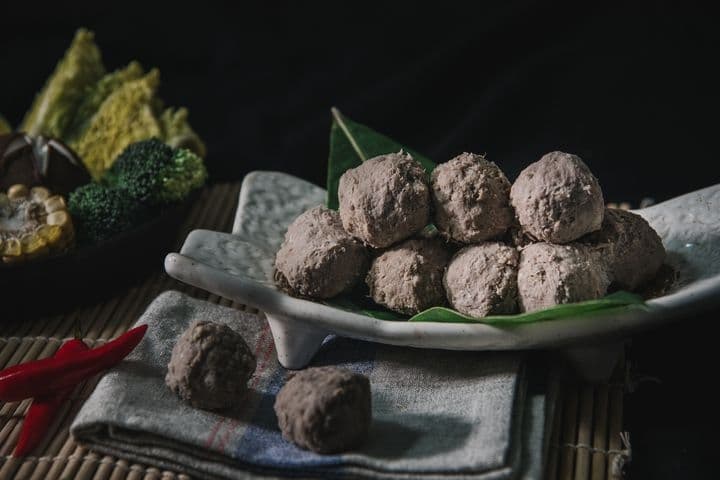
Defining hand-pounded craftsmanship: Hand-pounding refers to the process of manually pounding, tossing, and kneading meat to activate its protein fibers, creating stickiness and elasticity. This process relies on the experience of skilled masters who use their touch and visual judgment to determine when the meat paste has reached its optimal state. Shun Lung's hand-pounded beef balls and hand-pounded cuttlefish balls are quintessential examples of this craft.
The fundamental difference between hand-pounding and machines: While machine mixing is efficient, its motions are uniform and forceful, operating at a fixed speed and direction. This tends to disrupt the natural structure of meat fibers. The resulting meatballs may hold their shape, but they lack the depth and character found in handmade products. Hand-pounding is entirely different – masters strike the meat with a specific rhythm and force, gradually incorporating air into the paste while activating the proteins to form a delicate yet resilient network. This is a structure that machines simply cannot replicate.
The rhythm and cadence of hand-pounding: An experienced master develops their own rhythm and cadence when hand-pounding. The heavy wooden mallet rises and falls in a steady, rhythmic beat, almost like an ancient pulse. This rhythm is not arbitrary – the master constantly adjusts the force and frequency based on the changing consistency of the meat paste. This interplay between the craftsman and the ingredient is one of the most captivating aspects of hand-pounded craftsmanship.
The relationship between hand-pounding and time: Hand-pounding cannot be rushed. A single batch of meat paste may require hundreds or even thousands of strokes to reach the ideal texture. There are no shortcuts. Shun Lung is willing to invest this time because we believe that good food is worth the wait – and worth the care.
Part 2: A Step-by-Step Look at Making Hand-Pounded Beef Balls
The creation of hand-pounded beef balls is a skill refined through time and practice. Below is a detailed breakdown of the process, offering insight into how this product comes to life.
Step 1: Preparing the ingredients. High-quality beef is selected, and all sinew and impurities are carefully removed. This step is critical – any remaining sinew will affect the texture and appearance of the final meatballs. The trimmed beef is then cut into small pieces, ready for the next stage.
Step 2: Hand-pounding. The beef pieces are placed on a sturdy cutting board. The master, wielding a specially crafted wooden mallet or metal rod, pounds repeatedly with a distinct rhythm and force. This process does more than just break down the meat – it gradually incorporates air into the paste while activating the meat proteins to develop stickiness. Throughout the pounding, the master constantly turns and folds the paste to ensure even treatment.
Step 3: Seasoning and mixing. Once the paste has reached a fine, elastic, glue-like consistency, seasonings are added and mixed in by hand. This mixing stage is equally important – the seasoning must be evenly distributed without disrupting the carefully developed structure of the paste.
Step 4: Shaping the balls. With the seasoned paste ready, the shaping begins. The master scoops a portion of paste with one hand, squeezing it from between the thumb and forefinger to form a ball, while using a spoon in the other hand to swiftly scoop it off and place it into warm water to set. This motion may seem simple, but it takes years of practice to perfect – too much force, and the ball loses its roundness; too little, and it容易 falls apart.
Step 5: Cooking and setting. The shaped meatballs are gently heated in warm water, allowing the outer layer of protein to set. Careful control of heat and timing ensures even cooking while preserving the ideal texture. Once cooked, the meatballs undergo rapid chilling to lock in their freshness and moisture, before being packaged and shipped.
Part 3: The Unique Demands of Hand-Pounded Cuttlefish Balls
Making hand-pounded cuttlefish balls requires even more precision than beef balls, as the characteristics of cuttlefish meat differ significantly from beef.
The nature and challenges of cuttlefish: Cuttlefish has a high water content, a tender texture, and less natural gelatin than beef. This makes achieving an elastic meatball far more challenging. Any misstep can compromise the final texture and quality.
Processing cuttlefish by parts: When handling fresh cuttlefish, Shun Lung's masters treat the body and tentacles separately. The body, with its finer fibers, is best suited for making a smooth paste that forms the foundation of the meatball. The tentacles, which are firmer, are diced into small pieces and mixed into the paste, adding a pleasant granular texture to the finished product. This approach reflects years of accumulated experience and a deep understanding of the ingredient's properties.
Adjusting the pounding rhythm: The rhythm for pounding cuttlefish paste differs from that for beef. Because cuttlefish is more delicate, the pounding must be gentler to avoid damaging the meat structure, yet firm enough to activate the proteins and develop stickiness. Balancing these opposing demands relies entirely on the master's touch and experience.
Strict standards for freshness: The freshness of cuttlefish directly determines the success of hand-pounded cuttlefish balls. No amount of pounding can salvage subpar ingredients – the result will be a fishy odor and a disappointing texture. Shun Lung maintains rigorous freshness standards for cuttlefish, ensuring that only ingredients in optimal condition undergo the hand-pounding process.
Part 4: The Modern Significance and Value of Hand-Pounded Craftsmanship
In an age obsessed with efficiency, adhering to hand-pounded craftsmanship may seem outdated. Yet Shun Lung believes that this craft holds irreplaceable value for the modern world.
A guarantee of quality: Although hand-pounding is time-consuming and labor-intensive, it ensures that each batch achieves its highest potential. Machines can malfunction, settings can be miscalibrated – but an experienced master can adjust by feel in real time, ensuring consistent quality. This human oversight is a level of quality assurance that machines cannot match.
Cultural heritage: Hand-pounded craftsmanship is an intangible cultural asset. It carries the accumulated wisdom and experience of generations, forming an essential part of culinary tradition. Shun Lung's commitment to this craft is not only about product quality – it's about preserving these skills so they are not lost to the tide of mechanization.
Emotional connection: Because hand-pounded products carry the warmth and dedication of human hands, they offer an experience that machine-made products cannot replicate. The firm texture, the rich layers – these are not just pleasures for the palate but also connections to the maker. Consumers can sense that this is not merely a meatball, but the result of a craftsman's care and devotion.
An expression of slow food values: In a world that prizes speed and convenience, hand-pounded craftsmanship embodies a different philosophy – the idea that good things take time, and quality work cannot be rushed. This aligns closely with the growing slow food movement, reminding us that while efficiency has its place, food should also nourish the spirit.
Shun Lung's hand-pounded beef balls, hand-pounded cuttlefish balls, and handmade shrimp balls are a direct expression of this craft and philosophy. Through these products, we hope to share the value of hand-pounded craftsmanship with more people, helping to keep these traditional skills alive while bringing deliciousness and meaning to dining tables everywhere.