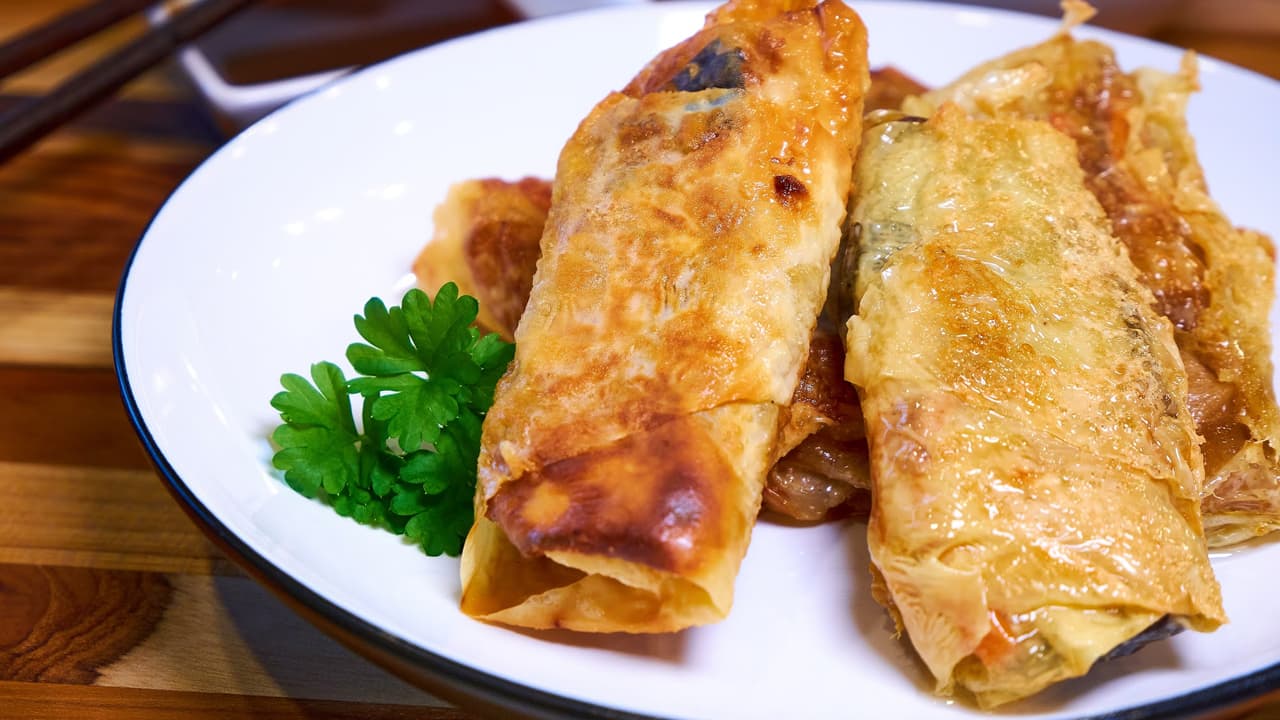
The Craft Aesthetics of Thousand-Layer Beancurd Rolls – The Art of Wrapping Thin as a Cicada's Wing
Among Shun Lung's beancurd roll series, the Thousand-Layer Beancurd Roll holds a special place. The name "thousand-layer" vividly describes the characteristics of this type of beancurd skin – thin as a cicada's wing, layered upon layer, as if there were a thousand sheets. This unique beancurd skin brings a distinctive texture and flavor to the beancurd rolls.
The Craft Aesthetics of Thousand-Layer Beancurd Rolls – The Art of Wrapping Thin as a Cicada's Wing
Part 1: Understanding Thousand-Layer Beancurd Skin – The Perfect Balance of Thinness and Resilience
Among Shun Lung's beancurd roll series, the Thousand-Layer Beancurd Roll holds a special place. The name "thousand-layer" vividly describes the characteristics of this type of beancurd skin – thin as a cicada's wing, layered upon layer, as if there were a thousand sheets. This unique beancurd skin brings a distinctive texture and flavor to the beancurd rolls.
The craftsmanship of thousand-layer beancurd skin: The production of thousand-layer beancurd skin is more refined than that of ordinary beancurd skin. When lifting the soy film, the masters must be exceptionally careful and precise to obtain high-quality beancurd skin that is uniformly thin and delicate yet unbroken. The lifted film is then properly pressed and dried, resulting in a paper-thin texture that still maintains sufficient resilience to wrap the filling without tearing easily. This perfect balance between thinness and resilience is precisely what makes thousand-layer beancurd skin so appealing.
The textural characteristics of thousand-layer beancurd skin: Because of its thinness, thousand-layer beancurd skin delivers a more delicate texture after heating. When deep-fried, thousand-layer beancurd rolls have an exceptionally crispy and light exterior. The moment you bite into them, the satisfying "crackle" and the delicate, brittle texture leave a lasting impression. When steamed or used in soups, thousand-layer beancurd skin quickly absorbs the broth, becoming soft and smooth, perfectly harmonizing with the filling.
The visual appeal of thousand-layer beancurd skin: Beyond texture, thousand-layer beancurd skin also offers unique visual beauty. After wrapping the filling, the thin skin subtly reveals the color of the filling within, creating a dreamy, translucent effect. When fried to a golden brown, the luminous golden hue is truly appetizing. Shun Lung's thousand-layer beancurd rolls embody this dual delight for both the eyes and the palate.
How to select thousand-layer beancurd skin: High-quality thousand-layer beancurd skin should have uniform thickness without any uneven spots; its color should be a natural golden yellow, not overly pale or dull; its texture should be dry but not brittle, able to bend slightly without breaking; its aroma should carry a faint bean fragrance, free from any burnt or off-putting odors. The thousand-layer beancurd skin used by Shun Lung meets all these standards.
Part 2: The Wrapping Process of Thousand-Layer Beancurd Rolls
Wrapping thousand-layer beancurd rolls is a skill that requires experience and dexterity. Every step affects the quality of the final product.
Preparing the beancurd skin: Because thousand-layer beancurd skin is thin, it requires extra care during handling. First, the skin is gently soaked in warm water to soften it. Timing is crucial here – too short, and the skin remains too stiff,容易 tearing during wrapping; too long, and it becomes overly soft and difficult to shape. Drawing on their experience, Shun Lung's masters precisely control the soaking time for each batch, ensuring the skin achieves the optimal balance of softness and resilience.
Preparing the filling: The filling for thousand-layer beancurd rolls differs slightly from that of regular beancurd rolls. Since the skin is thinner, the filling particles should not be too large, or they may puncture the skin. Shun Lung's masters finely dice ingredients like pork and water chestnuts into small, uniform pieces, ensuring a rich texture without compromising the integrity of the skin. The seasoning of the filling is equally meticulous, using simple flavors to bring out the natural taste of the ingredients, complementing the bean aroma of the skin.
Wrapping technique and pressure: When wrapping thousand-layer beancurd rolls, the handling and pressure are crucial. The masters place an appropriate amount of filling onto the beancurd skin, gently press it into a strip shape, and then slowly roll the skin from one end. During rolling, the pressure must be even and moderate – too tight, and the skin容易 tears; too loose, and the final product lacks firmness and容易 falls apart. At the end, the two ends are folded inward to seal, ensuring the filling does not leak out.
Shaping the final product: Wrapped thousand-layer beancurd rolls need proper shaping to hold their form. Shun Lung's masters arrange the finished rolls neatly, gently pressing them to make them firm, before proceeding to the next stage of cooking or packaging. This seemingly simple step also requires experience and patience.
Part 3: Diverse Cooking Methods for Thousand-Layer Beancurd Rolls
Thanks to their thin, crispy nature, thousand-layer beancurd rolls are suitable for a variety of cooking methods, each revealing a different facet of their charm.
Deep-fried thousand-layer beancurd rolls: This is the most classic and popular way to enjoy them. The wrapped rolls are placed in oil heated to about 160-170°C and deep-fried over medium heat until golden and crispy. Because thousand-layer beancurd skin is thinner, the frying time is slightly shorter than for regular beancurd rolls, requiring close attention to avoid burning. The deep-fried rolls have an exceptionally crispy exterior that shatters at the slightest bite, releasing the juices and aroma of the filling. The stark contrast between the crispy outside and tender inside is unforgettable.
Pan-fried thousand-layer beancurd rolls: For a lighter texture, pan-frying is an excellent choice. Add a little oil to a flat-bottomed pan and fry the rolls over medium-low heat until golden on both sides. During pan-frying, the bean aroma of the skin slowly releases, creating a unique fragrance. The pan-fried rolls have a slightly crisp, non-greasy exterior with a more pronounced bean fragrance, pairing well with light dipping sauces such as soy paste or garlic vinegar.
Steamed thousand-layer beancurd rolls: Steaming is another way to showcase the unique qualities of thousand-layer beancurd skin. Place the wrapped rolls in a steamer and steam over high heat for about 8-10 minutes. During steaming, the skin absorbs the juices released from the filling, becoming soft and smooth – a texture completely different from deep-frying or pan-frying. The steamed rolls can be drizzled with a little soy sauce and sesame oil, then sprinkled with chopped spring onions, offering a gentle, comforting flavor.
Braised thousand-layer beancurd rolls: Thousand-layer beancurd rolls can also be used in braised dishes. Cut deep-fried rolls into sections and place them in a pot with Chinese cabbage, glass noodles, shiitake mushrooms, and other ingredients. Add broth and simmer over low heat. During braising, the thousand-layer skin absorbs the essence of the broth, becoming soft yet slightly chewy, with a richer flavor. This preparation is especially suitable for winter – a steaming pot of braised goodness warms both heart and stomach.
Part 4: The Festive Culture and Modern Legacy of Thousand-Layer Beancurd Rolls
Thousand-layer beancurd rolls are more than just a delicious dish; they carry rich festive culture and culinary memories.
Auspicious meaning during Spring Festival: During the Spring Festival, thousand-layer beancurd rolls, with their golden appearance and layered form, are often associated with auspicious meanings such as "gold and jade fill the hall" and "rising step by step." Neatly arranging the golden, crispy rolls on a plate symbolizes wealth accumulation and continuous advancement in the new year. Many families include thousand-layer beancurd rolls as one of their New Year dishes, adding joy to the reunion dinner.
Symbol of joy at wedding banquets: In some traditional wedding banquets, thousand-layer beancurd rolls also hold a special place. Because "thousand-layer" (qiān zhāng) sounds similar to "thousand blessings" (qiān xiáng), these rolls are often seen as symbols of good fortune and are featured on wedding menus. The thin skin wrapping the rich filling symbolizes the newlyweds' future life – rich, colorful, and filled with blessings.
Emotional connection to home cooking: For many, thousand-layer beancurd rolls are deeply tied to family memories. Growing up, watching elders carefully wrapping these rolls in the kitchen – their focused expressions and skilled hands – are warm memories of childhood. The aroma of deep-fried beancurd rolls often evokes a longing for home. This emotional connection elevates thousand-layer beancurd rolls beyond mere food, making them a form of cultural heritage and emotional sustenance.
Shun Lung's mission of传承: Shun Lung's thousand-layer beancurd rolls aim to continue this tradition and emotion. With the same dedication, we select high-quality thousand-layer beancurd skin and hand-wrap each roll, allowing consumers to savor the taste of their memories at home. We believe that this traditional craft and flavor are worth preserving and passing down, so that future generations can also come to know and love this classic delicacy.